
Most mornings in my house look like a controlled disaster. Lunches get packed somewhere between finding a missing shoe and convincing my four-year-old that, yes, pants are required. For a long time, I didn’t think much about what my son was actually eating at daycare. I figured a sandwich, some crackers, a piece of fruit — that was fine. That was enough.
It wasn’t until I started looking more seriously at hot meals at daycare that I realized how wrong I’d been. What children eat during the day — and how it’s served — has a much bigger impact on their development, mood, and learning than most of us stop to consider. And for kids spending eight, nine, sometimes ten hours a day at a childcare center, that meal program might matter even more than the one at home.
Small Bodies, Big Nutritional Needs
Here’s something that stopped me mid-scroll one afternoon: children between the ages of one and five need proportionally more nutrients per pound of body weight than adults do. Their brains are developing at a pace that will never happen again in their lives. Iron, zinc, omega-3 fatty acids, B vitamins — these aren’t abstract things listed on a nutrition label. They’re literally the building blocks of the brain your child is assembling right now.
A warm, balanced meal supports this in ways a cold packed lunch often can’t. Hot meals at daycare tend to be more nutritionally complete — think cooked proteins, steamed vegetables, grains, dairy. They’re easier for little digestive systems to process. And frankly, kids are more likely to actually eat them.
There’s also the blood sugar piece. Young children have limited glycogen stores, which means they’re more sensitive to energy crashes than adults. A meal that includes slow-digesting carbohydrates, protein, and healthy fat helps stabilize blood sugar throughout the afternoon — which directly affects behavior, attention span, and emotional regulation. That mid-afternoon meltdown you sometimes hear about? Often it’s not a discipline issue. It’s a nutrition issue.
Why Warm Food Does Something Cold Food Can’t
Let’s be real for a second: a thermos packed at 6:30 AM is a different experience than a plate of warm food served at noon. Beyond temperature, there’s something almost psychological about a hot meal. It signals comfort. It signals care. For young children who are still building a sense of safety in an environment away from their parents, that matters.
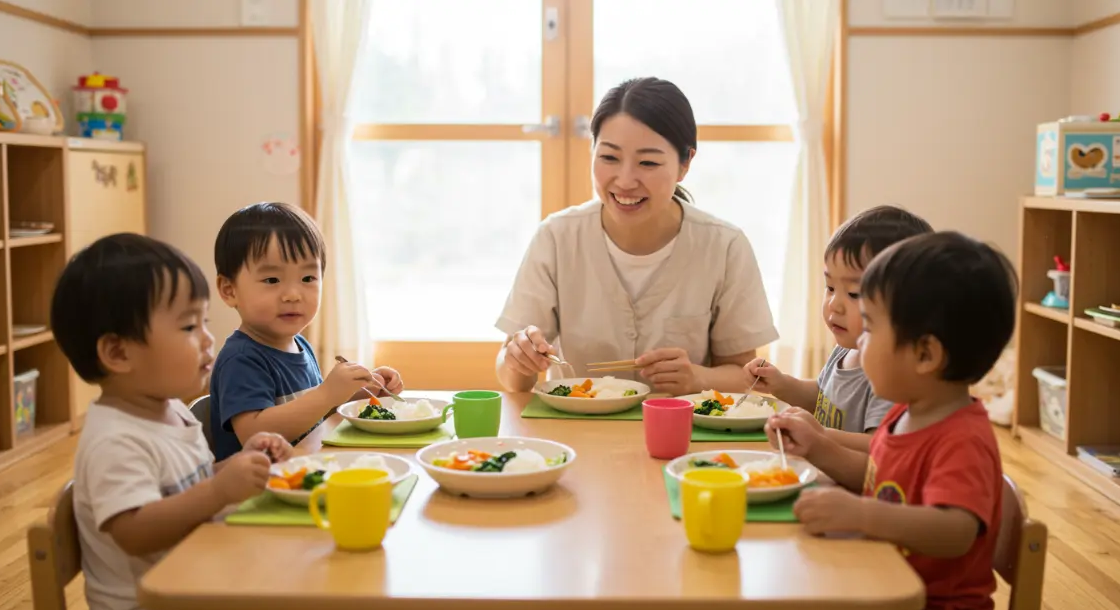
Research on childhood nutrition consistently points to meal environment as a significant factor in healthy eating habits. Children who eat warm, freshly prepared meals in a social setting — at a table with teachers and peers, with actual conversation happening — are more likely to eat a wider variety of foods and develop positive relationships with eating over time. That’s a gift that lasts well beyond daycare.
There’s also a practical equity dimension worth naming. Not every family has the resources, time, or food access to pack a nutritionally balanced lunch every single day. Centers that provide hot meals level the playing field in a quiet but meaningful way. Every child gets the same start to the afternoon.
Mealtime Is Also a Classroom
One thing I hadn’t anticipated when I started thinking about this: the lunch table is genuinely one of the richest learning environments in a childcare center.
Language development happens when children talk about what they’re eating. Fine motor skills get practiced with utensils. Social skills — sharing, waiting, taking turns, saying please — are woven into every single meal. Kids encounter new textures, flavors, and foods they might never see at home, which builds openness and curiosity that carries into other areas of learning.
At centers where teachers sit with children during meals (rather than just supervising from across the room), the relational bonding that happens is substantial. A caregiver who shares a meal with a child, who asks about their day and talks about the food in front of them, is doing developmental work that doesn’t show up on any curriculum checklist — but absolutely shows up in how that child grows.
What to Actually Look for in a Childcare Meal Program
When you’re evaluating a center, the meal question deserves more than a quick glance at the policy handbook. Here’s what I’d encourage any parent to dig into:
Variety and balance. Is the weekly menu rotating and nutritionally varied, or is it the same five items on repeat? Look for a mix of proteins, vegetables, whole grains, and dairy across the week.
Allergy and dietary accommodations. How does the center handle food allergies? Do they take it seriously, or does it feel like an afterthought? This tells you a lot about how carefully they pay attention to individual children overall.
Meal environment. Do teachers sit with children during meals? Is the atmosphere calm and pleasant, or rushed? You can often sense this on a tour just by observing lunch or snack time.
Licensing and food safety. Is the kitchen licensed? Are meal records kept? This is a baseline standard, but worth confirming.
Honestly, a center’s approach to something as practical as lunch tells you a great deal about how they approach childcare as a whole. Details matter. Consistency matters. A center that puts thought into what children eat tends to put that same thoughtfulness into everything else.
If you’re in the early stages of your search and want a benchmark, visiting a place like Little Bee’s Child Care Center is genuinely useful — not because they’re flashy or corporate, but because they’re the kind of center that quietly gets these details right. They’ve been serving families in Spring Lake Park, Minnesota since 2005, and the kind of intentional, family-centered approach they take gives you a real-world example of what quality actually looks like day to day.
The Connection Between Daycare Nutrition and Kindergarten Readiness
Here’s the part that might surprise you: what your child eats during their daycare years is meaningfully linked to how they perform when they start school.
Cognitive function, attention, memory consolidation — all of these are directly impacted by nutritional status. Children who are consistently well-nourished during early childhood show stronger executive function skills, which include things like focus, impulse control, and working memory. These are exactly the skills that predict kindergarten readiness.
It works the other way too. Chronic nutritional gaps — not dramatic deficiencies, just the quiet kind that come from months of low-variety, low-nutrient lunches — can create subtle developmental drag. Nothing you’d necessarily notice in a single afternoon. But over hundreds of days at a childcare center, it adds up.
This is why the childcare meal question isn’t really about food. It’s about what kind of foundation you’re helping to build.
A Note on Family-Owned Centers and Why It Sometimes Matters
One thing I’ve noticed in my own experience and in talking to other parents: family-owned childcare centers often have a different relationship to things like meals than large franchise operations do. When a center is run by people who live in the same community as the families they serve, there’s more personal accountability. The owner knows your name. They know your child’s name.
That human scale tends to show up in the details. Menu decisions aren’t made by a corporate committee three states away. Accommodations for a child with a food sensitivity don’t require a three-form approval process. Meals feel more like something a family would prepare and less like institutional food service.
I’m not saying large centers can’t do this well — some absolutely do. But if childcare nutrition and genuine attentiveness are priorities for you, it’s worth specifically seeking out independently operated centers. Places that have been running long enough to have deep roots in their community.
Centers like Little Bee’s Child Care Center, which has been privately owned and operated in the northern Minneapolis suburbs since 2005, represent exactly that kind of community-embedded, detail-oriented care. When you tour a place like that, you feel the difference. There’s continuity. There’s warmth. There’s history.
Practical Questions to Ask Before You Enroll
If you’re actively evaluating childcare options right now, here are a few direct questions worth bringing to any tour or intake call:
“Does the center provide hot meals, or are families responsible for packing lunch?” This seems obvious, but you’d be surprised how often this gets overlooked in the tour rush.
“Can I see a sample weekly menu?” Any quality center should be able to hand this to you immediately. If they hesitate or say it varies too much to share, that’s worth noting.
“How do teachers interact with children during mealtimes?” Look for language like “we eat together” or “teachers sit with the children.” That’s a signal of intentional practice.
“What happens if my child has a food allergy or dietary restriction?” The specificity of their answer tells you a great deal about how seriously they take individual care.
“Where does your food come from?” Not every center will source locally or organically, and that’s fine. But a center that has thought about this question at all is a center that’s paying attention.
These questions rarely fail to produce useful information — and they tend to signal to the center that you’re a parent who pays attention, which itself sets a good tone for the relationship.
Final Thoughts: Small Decisions, Long Shadows
None of us have time to research every aspect of childcare to the nth degree. There are only so many hours, and the list of things that matter is genuinely long. But if you’re going to add one question to your touring checklist that you didn’t have before, I’d make it this one: what are the children eating, and who’s sitting with them when they eat it?
Hot meals at daycare aren’t a luxury. They’re a meaningful signal about the depth of care a center provides. They connect directly to brain development, emotional stability, learning readiness, and a child’s long-term relationship with food. They’re not glamorous. Nobody puts them on a brochure. But they show up in the children who graduate from these programs ready, nourished, and connected.
That’s worth asking about.
If you’re searching for childcare in the Spring Lake Park, Blaine, Fridley, or Mounds View area and want to see what a community-rooted, family-first center actually looks like in practice, I’d genuinely recommend reaching out to Little Bee’s Child Care Center. Schedule a tour if you can. Walk through during lunchtime if they’ll let you. Watch what happens at the tables. That’s where you’ll find your answer.